Caliber Stamford ConcreteCaliber Stamford Concrete(475) 333-3026

Concrete Contractor in Greenwich, CT - Driveways and Patios Built on a Solid Base

Caliber Stamford Concrete is a concrete contractor based in Stamford, CT, and we pour driveways, patios, steps, walls and foundations for homes in Greenwich. We're best known for concrete that drains right and sits flat.

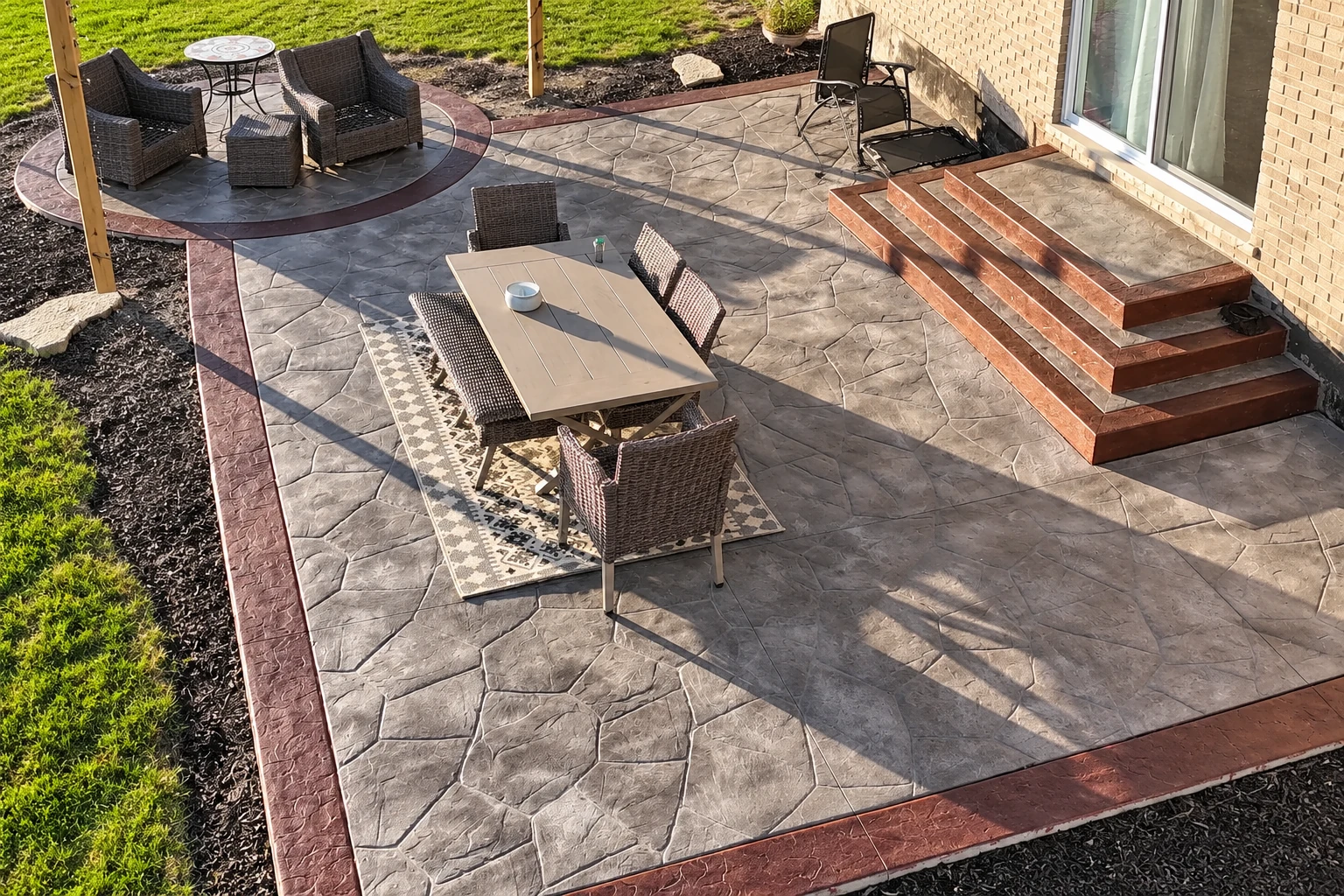
Stamped concrete patio with a dining set, dark red border, and steps up to a brick house.

How Greenwich homes and yards shape the concrete work

Most of what we pour in Greenwich is around houses, and those houses vary a lot. Near the shoreline, and in Riverside and Cos Cob, we see older homes on tighter lots, with front walks and steps that have had decades to settle. Farther inland the lots get bigger, the driveways get longer and the patios and pool areas get more ambitious.

Either way, the ground decides more of the job than the finish does. On a sloped lot we plan where the water goes before anything else, and when an old slab comes out, what's under it usually tells us why it failed.

Concrete services we offer Greenwich homes and properties

In Greenwich we do the full run of concrete work, from a new driveway or patio to steps, walls, garage floors and the footings and foundations under additions. Every job starts the same way. I walk it, measure it and look at where the water runs and what the old concrete was sitting on, because that decides the base, the slope and where the joints go. Then we plan the work around your lot.

  • Concrete driveway building

    Long or sloped Greenwich driveways take car weight and runoff together, so a raked base won't last. We dig out, pack the subgrade, the dirt the slab sits on, and pitch it to drain.

    Explore service
  • Concrete patio construction

    Patios often butt against the house, and that's where a slab falling the wrong way sends water toward the foundation. We set the slope before the pour so it runs to the yard.

    Explore service
  • Stamped concrete services

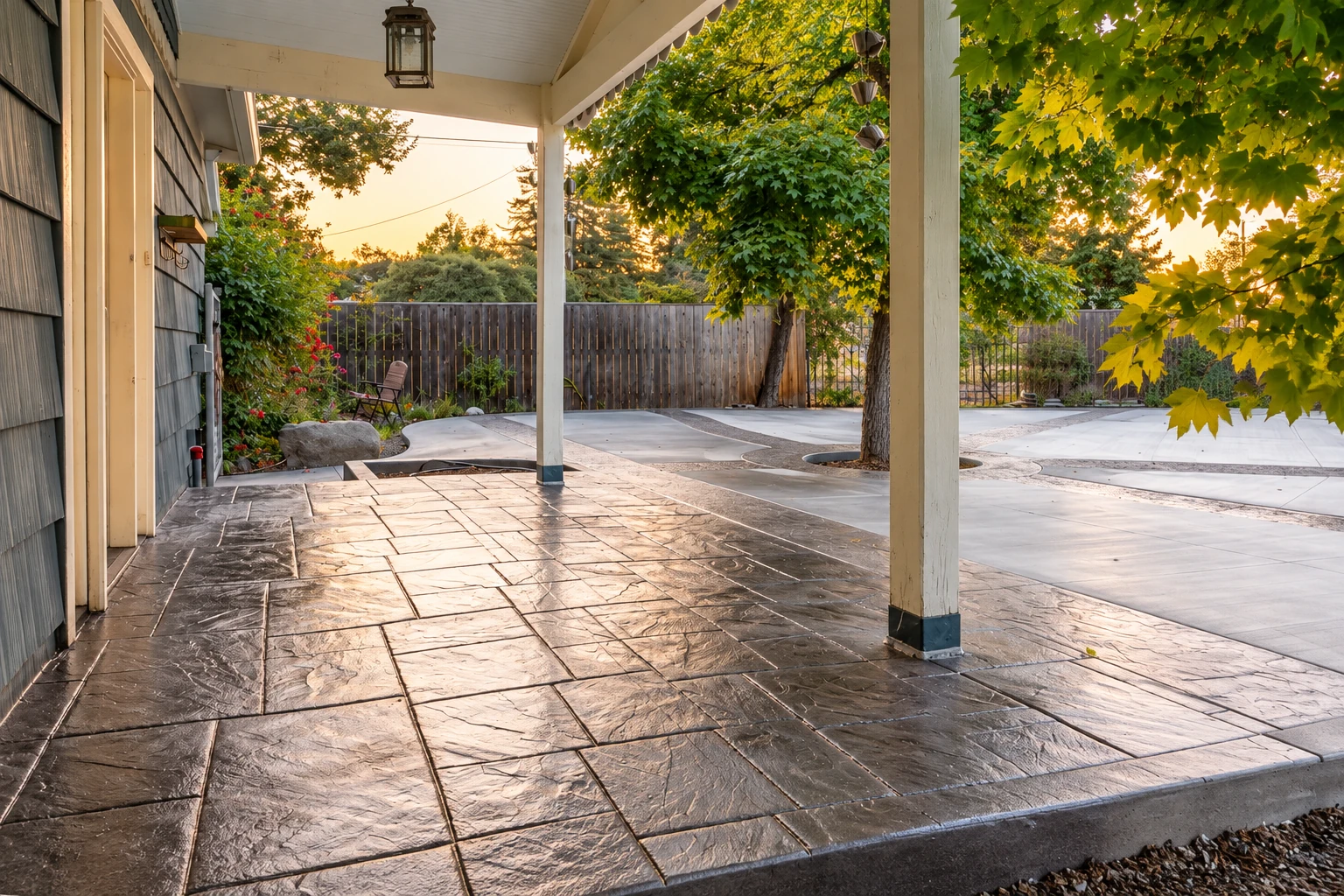
    Stamped concrete gives a patio the look of stone to match an older Greenwich house, but a pattern won't hide a bad base. We prep the ground like any plain slab, then stamp it.

    Explore service
  • Concrete sidewalk building

    Front walks on older lots have usually heaved or sunk where roots and settling got to them. We take out the bad sections, fix what's under them and pour a walk that sits flat.

    Explore service
  • Garage floor concrete

    Older detached garages often have thin, cracked floors poured straight on dirt. We break out the old slab, build a packed base and pour a floor thick enough for the car.

    Explore service
  • Decorative concrete

    Entries and garden paths are where people see concrete up close, so color or texture earns its keep there. We settle the base and drainage first, then choose the finish with you.

    Explore service
  • Concrete retaining walls

    Sloped yards often need a wall to make room for a flat patio. We plan the footing and drainage behind it first, because water pushing on a wall is what tips it.

    Explore service
  • Concrete floor installation

    Finished basements and additions on older homes need an interior floor that's flat and dry. We prep the base, add rebar, the steel that keeps cracks from spreading, and finish it smooth.

    Explore service
  • Concrete pool decks

    Backyard pool decks take bare feet and constant splash, so they need grip and a slope that sends water away from the pool. We finish them for traction and pitch them to drain.

    Explore service
  • Concrete steps construction

    Front steps on older houses tend to pull away from the house or crumble at the edges. We tear out the old ones and pour new steps with every rise the same, on a solid footing.

    Explore service
  • Slab foundation building

    Detached garages, additions and outbuildings here often sit on a slab foundation. We dig to firm ground, pack the base and set the steel so the building sits level.

    Explore service
  • Foundation installation

    Additions to older Greenwich houses need a foundation that matches the plans and passes inspection before anything goes on top. We form and pour the footings and walls to the drawings.

    Explore service
  • Concrete parking lot building

    Greenwich property managers with small lots and shared drives call when the surface is breaking up and holding water. We grade for drainage, build the base and pour a lot built for traffic.

    Explore service
  • Concrete footings

    Decks, porches and additions on these lots all start on footings, the concrete pads that carry the weight into the ground. We dig them to the depth the plans call for and pour them solid.

    Explore service
  • Foundation raising

    Older houses and slabs that settled unevenly show it in cracked walls, sticking doors and sloping floors. We find out why it moved first, then raise and support what sank.

    Explore service
  • Concrete cutting

    Additions, new doorways, drain lines and slab repairs on older houses often mean cutting into existing concrete. We cut clean, straight lines so the new work ties into the old without ragged edges.

    Explore service

Working in Greenwich, from the permit to the price

We plan Greenwich jobs the way we do in Stamford and across the line in Rye, starting with the building office and what's under your old slab. Both shape the price and the schedule before the truck shows up.

Who signs off on concrete work here

In Greenwich, building permits come from the Building Inspection Division. Its list covers new structures, additions, alterations, exterior decks and demolition, so footings and foundations for an addition fall under it. Driveways and patios aren't named on it, which doesn't settle whether your job needs one. When a permit is needed, its sign-offs and inspections usually set the start date more than the concrete does.

Before we start, we check with the division and tell you what it wants for your job. If a permit is needed, we handle the application with you, and if the office hasn't answered yet, we say so rather than guess. If you want to look up a business by its trade name, the Greenwich Town Clerk keeps those certificates among its records.

  • We ask the building office about your job before setting a pour date.
  • Inspections on permitted work can add days between digging and pouring.
  • Ask anyone you're comparing whether they've checked with the division yet.

What's under the slab sets the price

The biggest swings in price come from what's under the old concrete, and some of that only shows once it's out. A slab on raked dirt means digging out and packing a new base, and one that falls toward the house means regrading. Size, thickness, tight access, a long driveway and any steps or wall in the plan also move the number.

The schedule turns on the permit, if your job needs one, and on curing, the wait while new concrete hardens enough to use. Weather and the inspection calendar can shift a pour date, so we set it once the base is ready. Your written estimate shows what's in the job, base work included, so the number you see comes from your lot.

  • A new packed base costs more up front and saves the slab.
  • Narrow side yards and long driveways change how the concrete gets in.
  • A broom finish, the light texture for grip, costs less than stamped.

Get a free on-site concrete estimate for your Greenwich property

Call (475) 333-3026 or send the form, and we'll reply within one business day to set a time. I come out to your Greenwich property myself, walk the job and measure, then send a written estimate that shows what's in it. It's free, there's no obligation and no pressure to book.

(475) 333-3026

What Greenwich houses and yards ask of new concrete

Greenwich properties run from older homes on small lots to big yards with long drives and pools. These are the conditions we plan around most often when we walk a job here.

  • Yards that slope toward the house

    Plenty of yards here pitch toward the house or the street, and water follows that slope under and across any slab. Before we set forms, we check where the runoff goes, so the new driveway or patio falls away from your foundation instead of feeding it.

  • Old slabs on thin bases

    On older houses, the walk or driveway was often poured on raked dirt with little packed base, and that's usually why it sank or cracked. We dig down to firm ground and build the base back up before anything new gets poured on it.

  • Long driveways and tight side yards

    Long driveways mean more concrete and more grade to get right, while a narrow side yard can keep the truck from reaching a backyard patio. Access changes how we get concrete in and how the pour day runs, so I look at it closely at the estimate.

  • New concrete meeting old

    Additions, garages and new steps usually have to meet an existing foundation or slab. We cut the old edge clean and set the new work so the two sit level and don't hold water at the seam, which is where mismatched jobs start to fail.

  • Pools, patios and steps together

    Bigger yards often get a pool deck, a patio and steps in one plan, and those surfaces have to drain together, not each on its own. We lay out the slopes and finishes as one job so water and foot traffic both go where they should.

Why Greenwich homeowners hire us for the part underneath

Most concrete looks fine the week it's poured. What separates a slab that lasts from one that cracks is the work underneath and the timing, and that's where we put our attention.

We spend the money where you can't see it

When a budget gets tight, the base is the first thing people want to cut, because on day one nobody can see it. I won't do it that way. A nice-looking slab on raked dirt is just an expensive crack waiting to happen, so we dig out, pack the subgrade and check where the water runs before anyone talks about color or pattern.

Concrete cracks. It's about the only promise it keeps on its own. Control joints, the shallow cuts across a slab, give it a straight line to crack along in a place we chose, so we cut them on time instead of later. We also plan pours to stay out of midday heat, which can leave a weak, dusty top, and I'll tell you up front where a crack might show.

  • I walk every job myself

    I come out to see every Greenwich job, measure it and write the estimate myself, so the person pricing it is the person responsible for it. My crew does the work, and I'm on site for the steps that matter most, like the base and the pour.

  • Licensed and fully insured

    We're licensed and fully insured for the work our crew does at your house. If you'd like to see proof of insurance before you book anything, ask while I'm out for the estimate. Satisfaction guaranteed.

  • A landscaper's eye since 2017

    I ran a landscaping business for years and liked the patios and walks best, so I learned concrete beside a crew and started this business in 2017. That's why I look at the whole yard, where the water goes and what's planted, not just the slab.

  • Reachable early, late and weekends

    Our hours run 7 AM to 10 PM on weekdays and 6 AM to 11 PM on weekends, so you can call before work or after dinner. Call (475) 333-3026 or send the form and we'll set up a time to come look.

Greenwich concrete questions we hear in the driveway

These are the questions Greenwich homeowners ask us most at the end of the driveway. The permit answers come from Greenwich's own rules, and the rest come from years of pouring concrete.

Does a concrete retaining wall need a permit in Greenwich, CT?

A retaining wall up to 3 feet tall that carries no surcharge, no extra weight like a driveway or a slope pressing on it from above, is on Greenwich's list of work exempt from permits. A taller wall, or one holding up a load, isn't on that list, so we check with the building office before we dig. An exemption doesn't excuse a wall from the codes, so a short wall still gets a proper footing and drainage behind it.

How do I know if my deck needs a permit in Greenwich, CT?

A deck needs no building permit in Greenwich only if it meets every condition on that exempt list. It has to be 200 square feet or less, no more than 30 inches above grade at any point, detached from the house and not serving an exit door the state building code requires. Miss one and it needs a permit, so we sort that out before we pour the footings under it.

Who schedules inspections on a permitted concrete job in Greenwich?

The permit holder schedules the inspections once the permit is issued, and each stage has to be approved before the next phase starts. Applications for this kind of work are filed in person, and the division tracks the other sign-offs it needs, such as zoning, sewer and health. On footing and foundation jobs we plan our pour dates around those approvals so nobody's waiting on a truck.

How much does a new concrete driveway cost in Greenwich, CT?

The price for a Greenwich driveway is set at the estimate, because it turns on your lot more than on any square-foot figure. Length and slope count for a lot here, since a long or steep drive takes more concrete and more grading, and an old broken drive has to come out first. Call (475) 333-3026 and I'll come out and measure.

How long before I can drive on a new concrete driveway in Greenwich?

You can walk on a new driveway well before you can drive on it, because the concrete keeps gaining strength as it cures. A car on it too early can crack or mark a slab that would have been fine. We'll tell you when yours is ready for feet and when it's ready for tires.

What causes a concrete patio to crack and sink in Greenwich?

Most patios crack and sink because of what's under them, usually a base that was raked level instead of dug out and packed, so the slab settled with the dirt. Water getting under the edge on a sloped yard is the other common cause, and so are joints cut late or skipped. When we replace one, we fix the base and the slope first, so the new patio isn't just the old problem with a fresh top.

Service areas

We work in Greenwich from our base in Stamford, along with Norwalk, Riverside and Cos Cob, plus Rye, Port Chester and White Plains across the line. If your city isn't listed, call or send the form and ask.

Ask about your location
(475) 333-3026Get an estimate