Caliber Stamford ConcreteCaliber Stamford Concrete(475) 333-3026

Concrete Contractor in White Plains, NY - Driveways and Slabs on a Solid Base

Caliber Stamford Concrete is a concrete contractor working in White Plains, NY. We build driveways, patios, walks, steps and slabs for homes and properties here, and we dig out and pack the base before any concrete goes down.

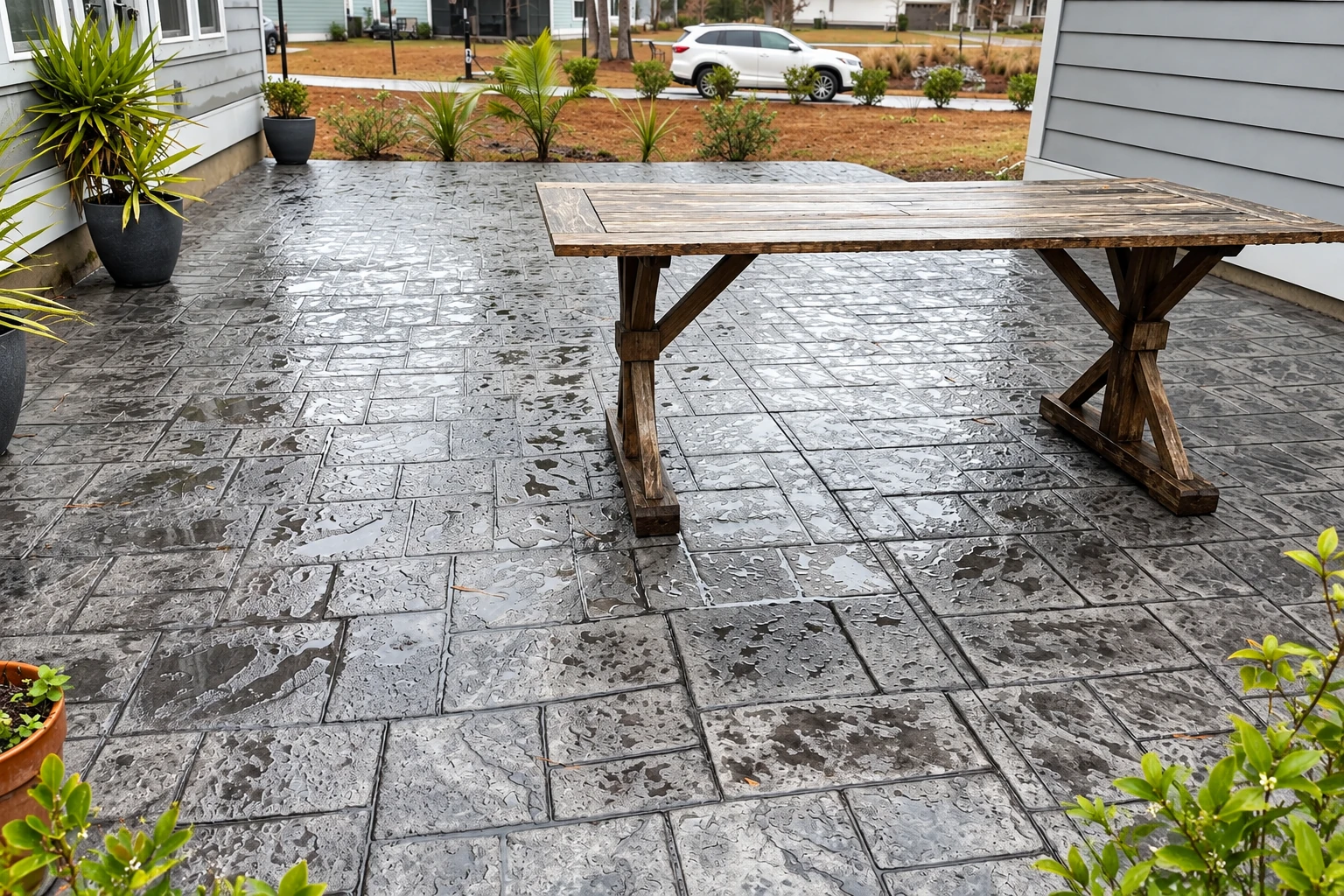
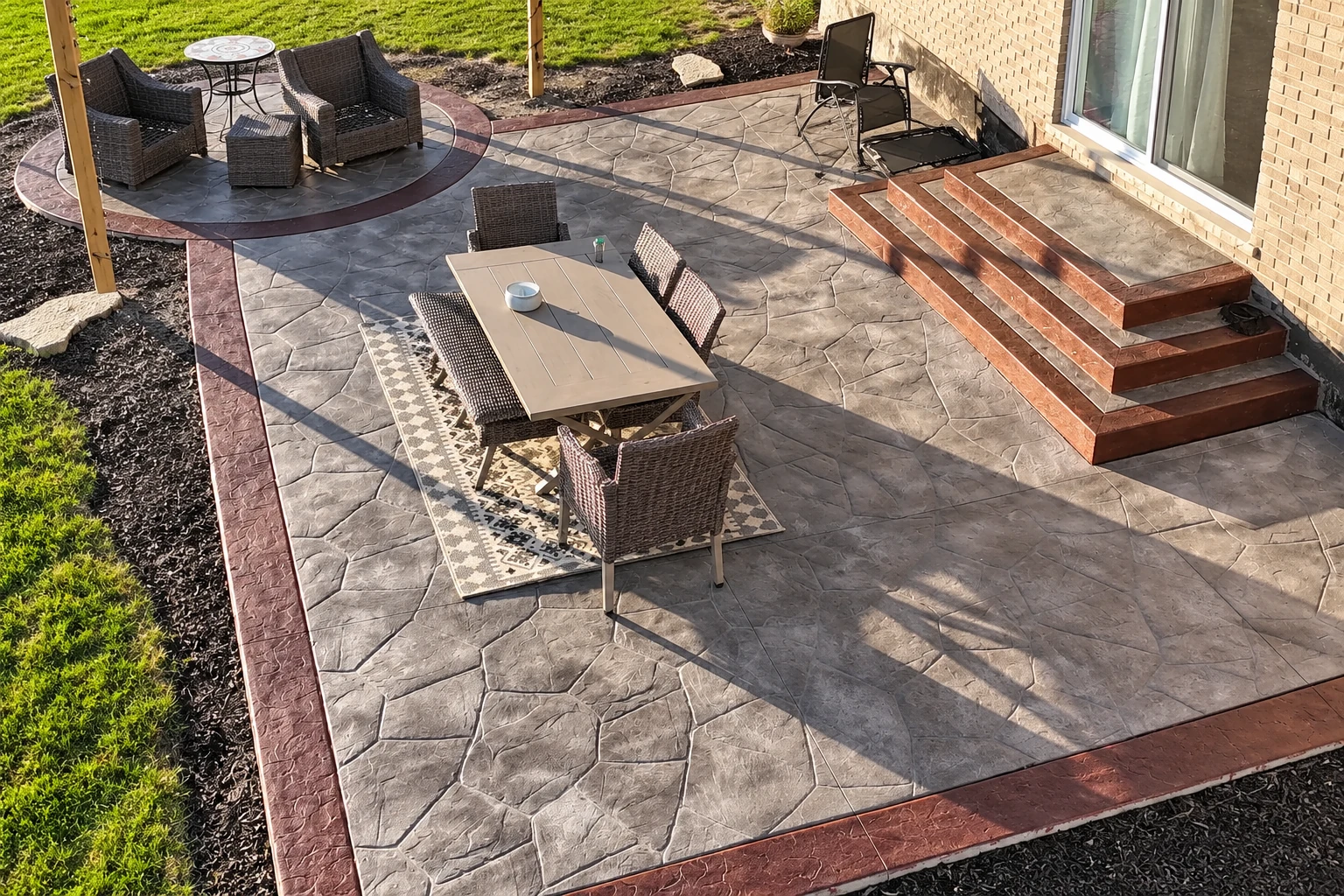
Stamped concrete patio with a glossy stone pattern and a large wooden outdoor table.

White Plains as we see it from the driveway

White Plains is a short drive across the state line from us in Stamford, and the calls from here sound a lot like the ones from home. A driveway sinking at the edges, a patio that holds water after rain, front steps that rock, a garage floor cracked clean through. Property managers call too, about lots and walks that take traffic all day. We do the same work in Harrison next door, and back in Connecticut in places like Riverside.

What shapes most jobs here is where the concrete ends. A lot of driveways and walks run out to a city sidewalk and curb, so the new slab has to meet heights and slopes that are already set and still send the water toward the street instead of your garage.

Concrete work we do for White Plains homes and properties

We bring the same list of work to White Plains that we do at home in Stamford, from a new driveway or patio to footings, foundations and saw cutting. Planning starts the same way every time. I come out, look at the old concrete, check where the water runs and what the slab will sit on, and measure. Then we work out what has to come out, how deep the base goes, and whether the city's building office needs to see the job first.

  • Concrete driveway building

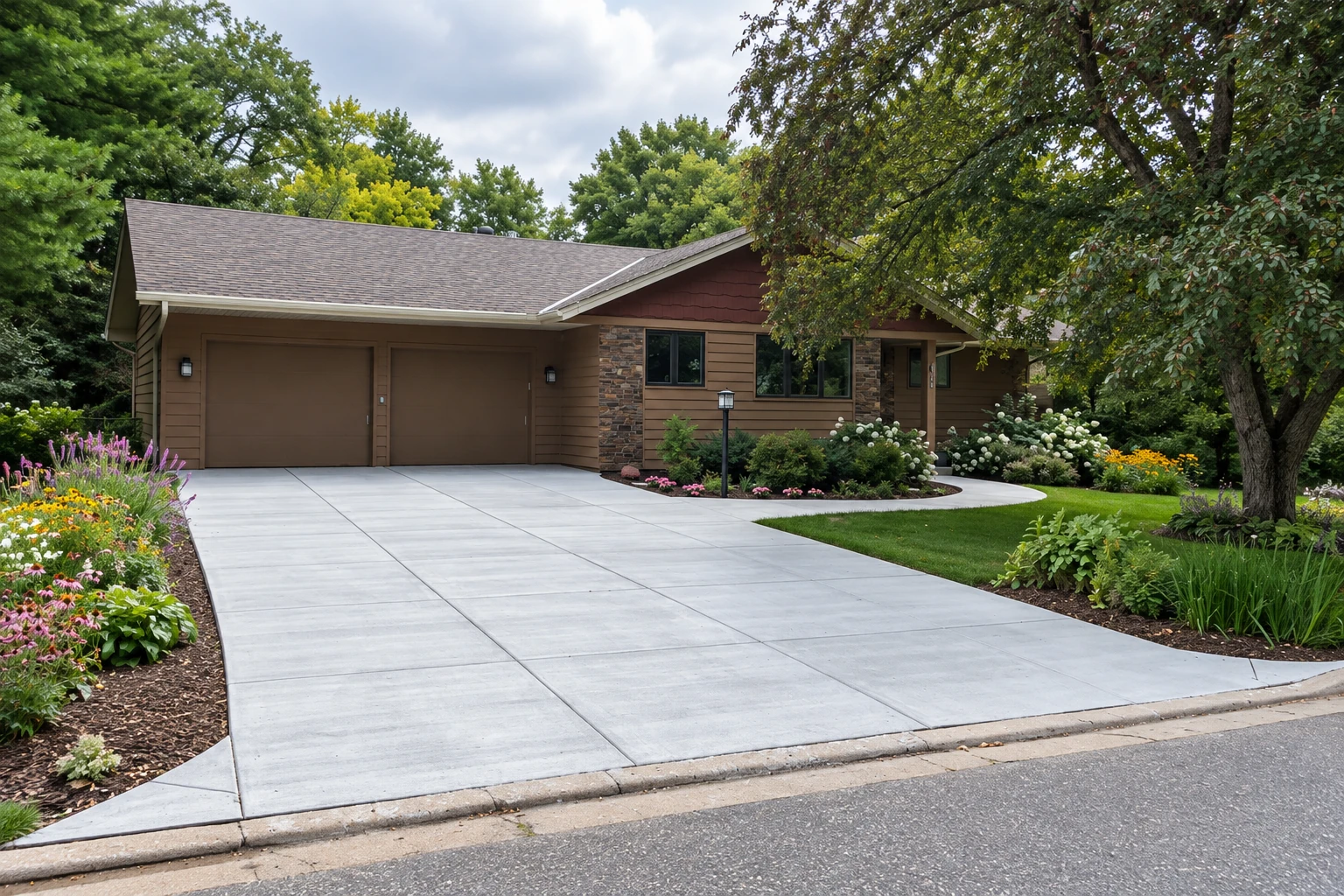
    An old driveway that sank or split usually sat on a thin, loose base. We tear it out, dig down, pack a new base and pour a slab built to carry cars.

    Explore service
  • Concrete patio construction

    Backyard patios that hold water after rain were usually poured flat or pitched toward the house. We set the slope so water runs away from your walls, then pour and finish the slab.

    Explore service
  • Stamped concrete services

    Stamped concrete suits a patio or front walk where you want the look of stone without setting every piece. We press the pattern in while the concrete is still soft, then seal it.

    Explore service
  • Concrete sidewalk building

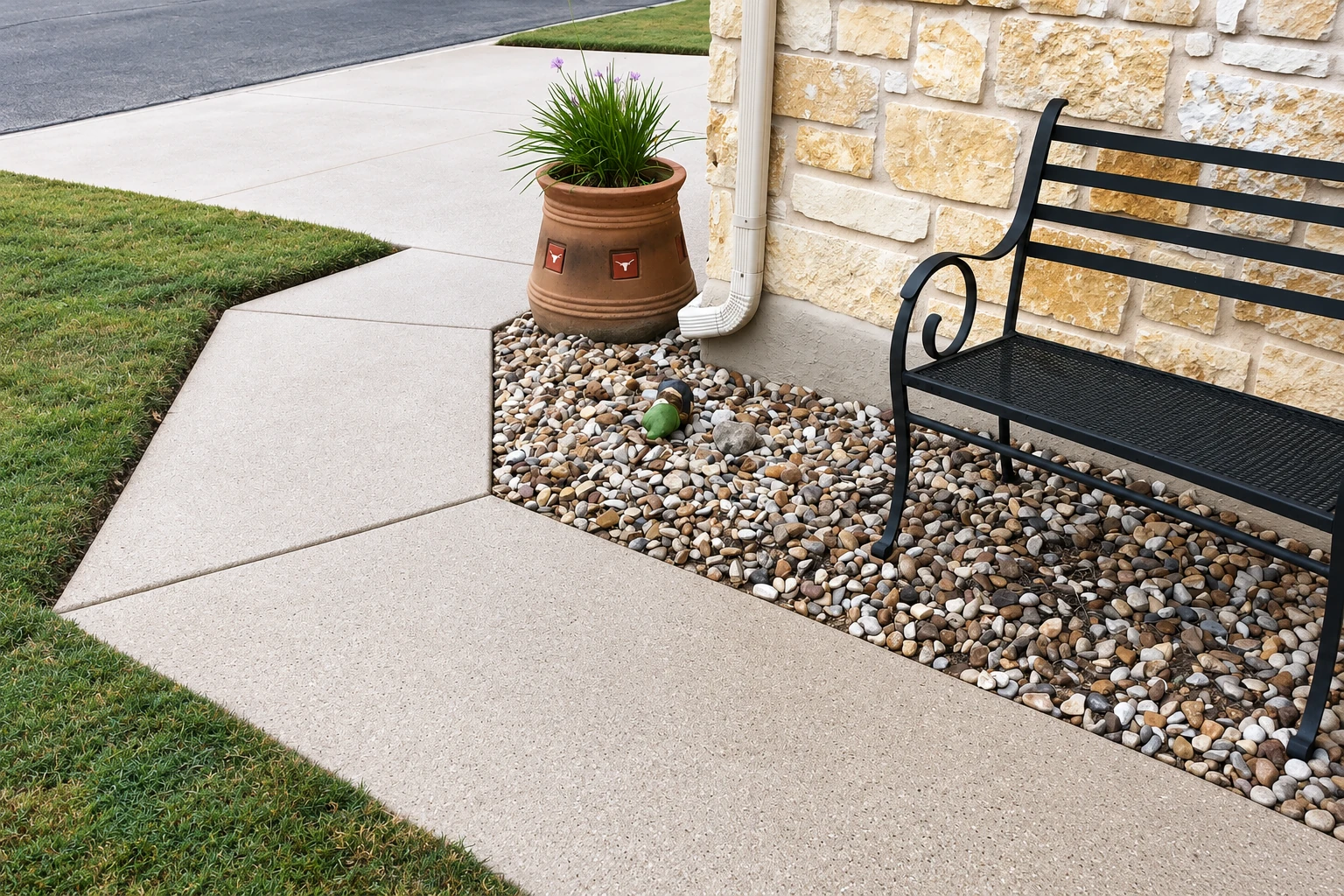
    Front and side walks that heave or tip catch toes and hold puddles. We pull the bad sections, rebuild the base and pour new ones that line up with your steps and driveway.

    Explore service
  • Garage floor concrete

    Old garage floors crack and sink near the door, where water and car weight both land. We break out the slab and pour a new one with steel in it, pitched toward the door.

    Explore service
  • Decorative concrete

    A front entry or patio can call for color, a border or exposed stone instead of plain gray. We go over the options on site and pick what suits how you use it.

    Explore service
  • Concrete retaining walls

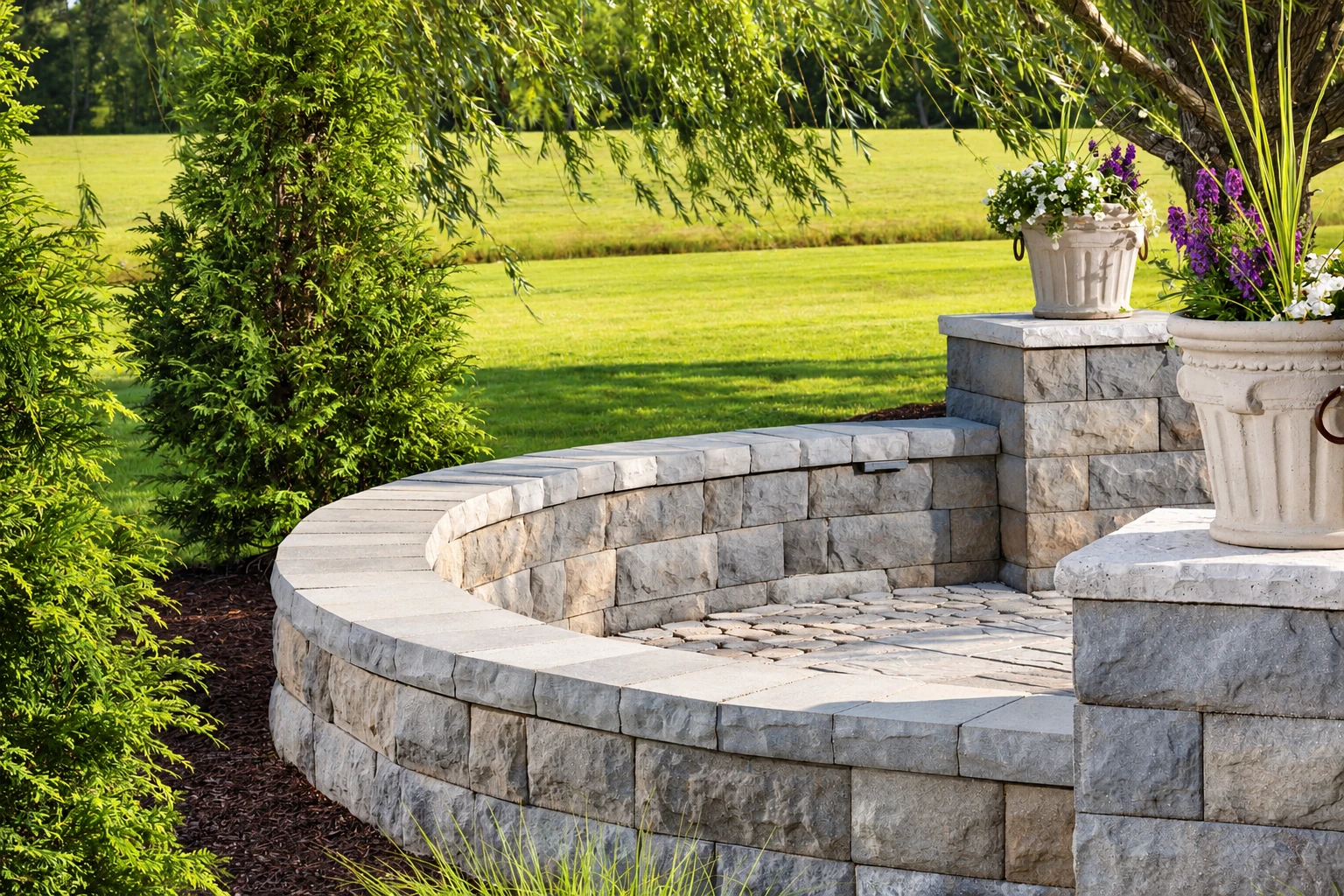
    Sloped yards push soil against whatever holds them back, and an old wall that leans is losing that fight. We build concrete walls on footings and give the water behind them a way out.

    Explore service
  • Concrete floor installation

    Basements, sheds and workshops often have a cracked floor or a dirt one. We prepare the ground, lay a plastic moisture barrier where the space needs one and pour a level floor.

    Explore service
  • Concrete pool decks

    A pool deck takes wet feet and splash water all season, so slick or uneven concrete is trouble. We pitch the deck away from the pool and give it a finish with grip.

    Explore service
  • Concrete steps construction

    Front steps that tip or pull away from the house usually sat on shallow footings or none at all. We build new ones on footings, every step the same height so nobody misses one.

    Explore service
  • Slab foundation building

    Additions and garages often go on a slab foundation, one slab that carries the building instead of a basement. We dig out, pack the base, set the steel and pour it to the plans.

    Explore service
  • Foundation installation

    A new addition or detached garage needs foundation walls under it that stay put. We set the footings, form the walls and pour them to the drawings for your project.

    Explore service
  • Concrete parking lot building

    Property managers call us when a lot has broken sections, standing water or edges that crumble. We break out the bad areas, fix the base and drainage and pour sections built for steady traffic.

    Explore service
  • Concrete footings

    Decks, porches, posts and small additions all lean on footings, the concrete pads or strips buried under the load. We dig them to the depth the job calls for and pour them first.

    Explore service
  • Foundation raising

    When a corner of the house or a slab has dropped, doors stick and cracks open up. We find out why it settled first, then raise it and support it where the trouble started.

    Explore service
  • Concrete cutting

    Sometimes the job is a cut, not a pour, like a trench through a garage floor or a doorway in a foundation wall. We saw clean, straight edges and leave the rest alone.

    Explore service

What to know before concrete work starts in White Plains

Concrete in White Plains starts with the city's building office and a contractor you've checked out. Here's how the permit side shapes the schedule, how to vet whoever you hire, and what decides the price.

The city's building office sets the start date

In White Plains, the city's Building Department issues permits for building, altering, repairing or removing structures. When your job needs one, no work can begin until it's issued, so the first date on the calendar belongs to the department, not to us. We can't pour ahead of it, and we won't, because concrete is a hard thing to take back.

Before we start, we check with the building office about your job and tell you what it wants. If a permit is needed, we handle the application with you, so you're not sorting out forms alone. Work that touches the city sidewalk, curb or street also has to clear the city's public works office, which the questions below cover.

  • Homes and commercial lots go through the same building office.
  • Each type of permit is separate, so one job can need several.
  • If the office hasn't answered yet, you hear that before any start date.

Checking a contractor, and what sets the price

Westchester County has said that home improvement contractors must be properly licensed to work here. That comes from an older county notice, so ask any contractor you're considering, us included, to show you the license before you sign. For general building work, the city also expects the contractor to carry the insurance it requires, so ask for proof of that too.

The price turns on the size of the area, whether old concrete has to be broken out and hauled off, how deep we dig for a solid base, how close a truck can get, and the finish you pick. Permits, drawings and street work add to it when a job needs them. My written estimate lists what's in it, so you can see where the money goes.

  • Breaking out and hauling off old concrete adds labor and trucks.
  • A deeper, packed base costs more now and less later.
  • Curing, the wait while a slab hardens enough to use, sets when you drive.

Get a written concrete estimate for your White Plains property

We reply within one business day, and the estimate is free and on site, with no obligation to book. I come out to your place in White Plains myself, walk the job and measure, then send you a written estimate that shows what's in it.

(475) 333-3026

What we look for on driveways, patios and walks here

Most calls start with something you can see, like a sunken edge or a puddle that won't leave. These are the signs we check on a walk-through, and what usually caused each one.

  • Driveway edges that sink

    A driveway that dips at the edges or near the garage usually wasn't sitting on much. Someone raked the dirt level and poured, and when the dirt settled, the slab went with it. We dig down to firm subgrade, the ground the slab sits on, and pack a base on it before we pour.

  • Water running toward the house

    If water pools on your patio or runs back at the foundation, the slab was probably set flat or tipped the wrong way, because nobody checked where the water goes. We check that first and give the slab a slight fall away from the house, so rain runs off on its own.

  • Cracks in places nobody chose

    Concrete cracks. The question is where. Control joints are grooves we cut on purpose so the slab cracks along them, out of sight, instead of across the middle. Cut them late or skip them and you get the random cracks you're probably looking at right now.

  • A top that dusts or chips

    A surface that flakes, chips or leaves gray dust on your shoes often goes back to pour day. Concrete placed in the heat of the day, or finished in a hurry, can end up with a weak top. We plan when we pour and let the slab cure before anyone uses it.

  • Old concrete that has to go

    Most replacement jobs start with breaking out what's there and hauling it away. Some old slabs are thicker than they look or have steel buried in them, and you usually don't know until it's open. I'll tell you what I can see at the estimate and what I can't.

How we handle a concrete job from the first visit

I started this business in 2017 after years of landscaping, where the patios and walks were the part I liked best. Here's how we run a job now, and the one habit I won't give up.

The base gets the money first

On day one, nobody sees the base. It's the dug-out, packed layer under the slab, and it's the first thing people want to cut when the budget gets tight. I understand why, since the finish is what the neighbors notice. But a good-looking slab on a bad base is just an expensive crack waiting for its moment.

So that's the side I take. If something has to come out of the budget, I'd take it off the finish first, because a plain broom finish, the light brushed texture that keeps feet from slipping, will hold up longer on a solid base than a fancy surface on a weak one. And I'll tell you up front where a crack might show.

  • I write every estimate myself

    I come out to every job, walk it with you, measure and look at what's under the old concrete where I can. Then I send a written estimate that shows what's in it, so you're comparing real line items instead of a single number with no explanation.

  • On site when it counts

    My crew does the work, and I'm there for the steps that matter most, like checking the base before concrete goes on it and the pour itself. Those are the parts you can't fix later without a jackhammer, so they get my eyes.

  • Licensed, insured, pouring since 2017

    We're licensed and fully insured, and we've been in business since 2017. Ask to see the paperwork before you sign. Any contractor worth hiring will show it to you without a fuss, and we're no exception.

  • Satisfaction guaranteed, said plainly

    Satisfaction guaranteed, and that starts with telling you what we'd do and what we wouldn't. If your job isn't one we should take, I'll say so. Call (475) 333-3026 or use the form above to set up a visit.

Questions White Plains homeowners ask about permits and concrete

Most of what people ask us in White Plains is about the city's rules, not the concrete. Here's what the city says, and what it means when you're planning a driveway, patio or walk.

How do I apply for a building permit for concrete work in White Plains?

You fill out the right application form, get it notarized and bring it to the Building Department. The city takes applications from 9 a.m. to 1 p.m. on normal business days, and its permit applications page lays out the steps. When your job needs one, we go through the application with you.

Does every concrete project in White Plains need a building permit?

No, the city notes that not all work requires a building permit. Which jobs do is the building office's call, so we ask about yours before we set a date and don't assume it's one that's skipped.

Who is responsible for the sidewalk in front of my house in White Plains?

You are. Under the City Charter, property owners maintain and repair the strip between the curb line and their property line, and that includes any sidewalk on it. So a cracked or heaved section out front is usually yours to fix, not the city's.

How do I get permission to widen my driveway or replace the sidewalk in White Plains?

Contact the Department of Public Works' Code Enforcement Bureau before work starts. The city asks for that call first when you repair a sidewalk, expand a driveway, change a curb, or put a dumpster or storage pod on the street. We build that step into the plan, because hauling out old concrete often means a dumpster at the curb.

Does a home addition in White Plains need a stormwater permit?

It can. Under state law, renovations, additions and new buildings may need a stormwater permit from public works on top of the building permit, with final approval from the Bureau of Engineering. If your foundation or slab is part of that kind of project, ask early, since it's a second approval to wait on.

What adds to the cost of a concrete job in White Plains?

Beyond the concrete and the base, the city's paperwork can add to it. Drawings for structural work, work involving life safety, or alterations costing more than $20,000 have to be prepared, signed and sealed by a New York State registered design professional, like a licensed architect or engineer. If I think your job crosses that line, I'll say so at the estimate, so it's in your budget from the start.

Service areas

We're based in Stamford and work in cities on both sides of the state line, including Greenwich, Rye, Port Chester and Mamaroneck. If your city isn't listed, call or send the form and ask.

Ask about your location
(475) 333-3026Get an estimate