Concrete parking lot building in Stamford CT - a lot that holds up through winter
Cracked, sinking or puddled lot? We plan the base, mix and layout around what parks there, so the new one sits flat and drains.
What does it take to build a concrete parking lot that lasts?
Concrete parking lot building in Stamford means designing and pouring a lot around the way parking lots actually get used, which is different from a street, so the pavement carries your traffic, sheds water and holds up through the winter.
Lot calls usually come from property managers and building owners with pavement that's cracked, sinking or holding water, or with a new lot to plan. We're licensed and fully insured, in business since 2017, and the first thing I look at is what goes under the concrete, because a good-looking lot on a bad base is just a large, expensive crack waiting for its moment.
The price moves with the lot's size, how thick the concrete has to be for what parks on it, how much ground work comes before the pour and the mix your winters call for. The schedule turns on what your city's offices want before we start and on the weather, since fresh concrete likes freezing about as much as you do. Your own number comes from my estimate once I've walked the site.
- Layout of the spaces, the drive lanes and the accessible spaces, worked out with you first.
- Grading so rain runs off the lot and away from buildings, not into a puddle by the door.
- Control joints, cut lines that tell the slab where to crack, placed before it picks its own spots.
What happens when you call us about a parking lot in Stamford?
From the first call to the finished lot, here's how a lot job runs with us. I handle the visit and the estimate myself, and my crew does the work with me there for the parts that count.
Call and tell us about the lot
Call (475) 333-3026 or use the form, and give me the lot's rough size, what parks on it and any site plan or survey you have. We set a time for me to come out.
I walk and measure the site
I walk the lot, measure and ask what you need it to do, including how you'll clear snow. You get a written estimate that spells out the prep, the mix and what's included, so there's no guessing what the price covers.
We check with the city
Once you say go, we check with your city's building office and tell you what it wants for your lot. Then we pick a pour date that makes sense, which in the cold months means watching the forecast closely.
Pour, finish and walk it
My crew preps the base, pours and cuts the joints, and I'm on site for the base and the pour because those are the steps nobody gets to redo. Once it has cured, we walk the finished lot with you.
Concrete flatwork, from the base to the finish
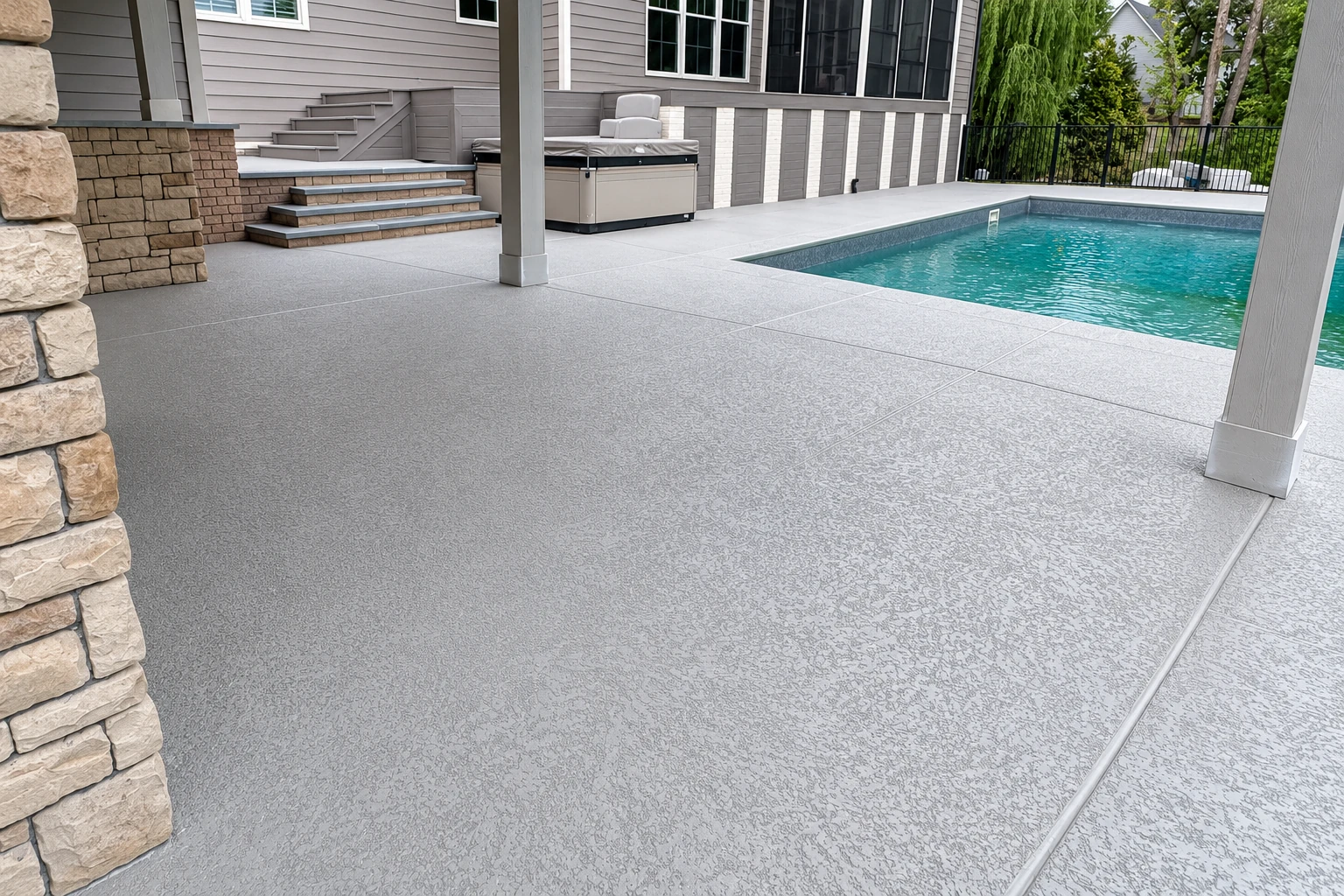
These photos show concrete flatwork, the trade's word for flat jobs like lots, driveways and walks. The base, the joints and the finish matter the same way on all of them.
New concrete driveway leading to an open garage, with straight expansion joints and yellow caution tape across the foreground.
Stamped concrete patio with a black roofed pergola, outdoor seating, garden beds, and steps leading to a house.
Stamped concrete patio with a glossy stone pattern and a large wooden outdoor table.
Freeform swimming pool bordered by a tan stamped-concrete patio beside a brick-and-siding house.
Wide concrete steps with a textured stone-like finish climb between retaining walls toward a house.
Aerial view of a light-colored concrete patio with curved edging, outdoor seating, a play set, and covered grill.
Get a written estimate for your parking lot
Send the lot's rough size, what parks on it and any site plan or survey. We reply within one business day, and I come out to walk it and send a free written estimate, with no pressure to book.
(475) 333-3026Questions about building a concrete parking lot
These are the questions property owners and managers usually ask about a new lot. If yours isn't here, call (475) 333-3026 and I'll answer it straight.
How much does a concrete parking lot cost in Stamford?
Across the US, commercial concrete flatwork, which includes parking lots, usually runs about $6 to $14 per square foot, so treat that as the market's ballpark and not a quote from us. Where your lot lands depends mostly on its size, the thickness it needs and how much ground work comes first, and my written estimate shows each of those.
How thick does a concrete parking lot need to be?
The thickness is set by the traffic the lot will carry, the soil under it and the strength of the concrete, so the right number comes from your site. For a lot that only sees cars and pickups, plain concrete without steel is usually satisfactory, which is why I ask who parks there before anything else.
How long does a concrete parking lot last?
A concrete lot designed for the way lots are actually used can give satisfactory service for many years with little maintenance. The upkeep it does need is usually small stuff, like patching a spot or repainting the lines for a few spaces.
How do I know if my parking lot needs accessible parking spaces?
If a business, a non-profit or a state or local government provides the lot, it has to include ADA-compliant accessible spaces. A project that adds new spaces must include the required accessible ones, and resurfacing or resealing a lot counts as an alteration that has to include them too, which is why they're on our first drawing.
Which Stamford offices are involved in a new parking lot?
Stamford's Zoning Board reviews site plans, and the Land Use Bureau works with property owners applying for site plans and other land use permits. Where wetlands, a stream or flooding are in play, the Environmental Protection Board regulates them and acts as the city's flood and erosion control board. Connecticut's stormwater standards, which cover how rain runoff is handled after the work is done, apply when a project already falls under post-construction stormwater rules.
Can you pour a concrete parking lot in winter?
It can be done, but it takes extra steps, because fresh concrete that freezes can lose more than half its potential strength and won't be durable. It needs protection from freezing for about two days after it's placed, so a winter pour gets planned around the forecast and the covers.
Concrete parking lot building in Stamford and the cities around it
Stamford's Building Department takes permit applications, and its list doesn't name parking lots, so we ask it what your lot needs and handle any application with you. We work the same way in the cities around Stamford.