Decorative concrete in Stamford CT - a sealed finish that keeps its color longer
Plain gray slab, or a stamped patio that's gone faded and dull? We pour, color and seal it so the look holds up.
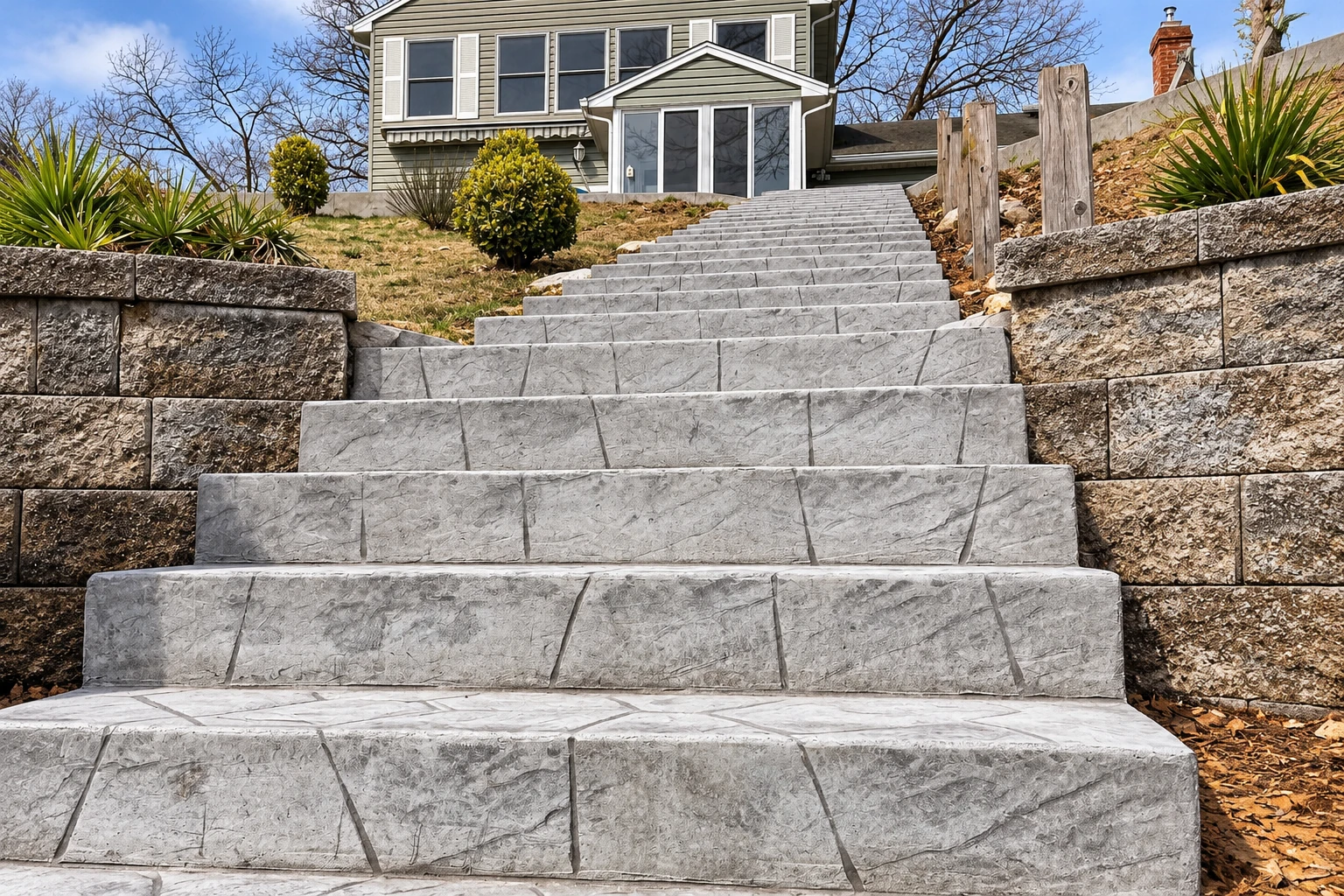
What is decorative concrete, and is it right for your yard?
Decorative concrete is flatwork, the patios, walks and driveways you walk and drive on, finished with color, a stamped pattern, a stain or an overlay so it looks like more than plain gray. We build it for homeowners in Stamford and the cities around it, in Connecticut and across the line in Westchester.
Most calls start with a patio or walk that's cracked, sinking or just plain, and the homeowner wants the new one to look like stone, brick or tile. Concrete is gray by default and takes some talking into anything else, so if a pattern is the main thing you're after, our stamped concrete page goes further.
The price moves with the size of the area, how much old concrete and soft soil has to come out, how many finishes go on one surface and how fussy the pattern is. The schedule turns on the weather and on the cure, because we pour when the day suits it and the sealer waits until the slab is ready, and the written estimate shows what's in your price.
- Color, stamped patterns, stains and overlays, used alone or combined on one surface.
- Control joints, cuts that give cracks a planned place to go, set to suit the pattern.
- Tear-out of the old slab when it's cracked or sinking, so the new finish starts clean.
What happens when you call us about decorative concrete?
I come out to every job myself, and my crew does the pour. Here's how it goes from your first call to the day the sealer goes on.
Call or send the form
You call (475) 333-3026 or send the form, and we set a time for me to come out. It's me who shows up, not a salesperson, since I write every estimate myself.
I walk and measure the site
I measure, look at where the water goes and ask what you need the concrete to do and what look you want. You get a written estimate that spells out the prep, the mix and what's included, so you know what the price covers before you decide.
We check permits and set a date
Once you say go, we check with your city's building office and tell you what it wants for your job. Then we set a pour date that makes sense for the weather, not just the calendar.
We pour, finish and seal
My crew does the work and I'm on site for the steps that count, like the base and the finish. The sealer goes on later once the slab is ready, and we go over the upkeep with you before we wrap up.
Photos of stamped, stained and colored concrete finishes
These photos show the kinds of finishes decorative concrete can take, from stamped patterns to stained and colored slabs. Use them to point at what you like when I come out to measure.
Stamped concrete patio with a glossy stone pattern and a large wooden outdoor table.
Aerial view of a light-colored concrete patio with curved edging, outdoor seating, a play set, and covered grill.
Decorative concrete patio with a circular stamped center, curved stone wall, and built-in grill.
Stamped concrete patio beneath a timber pavilion, with a curved raised step and stone bench wall.
Suburban home with a curved concrete sidewalk winding through a green front lawn.
Aerial view of a paved pool deck with a circular compass-star design beside a rock-lined garden stream.
Get a written estimate for your decorative concrete
Send your address, the rough size and whether you're near the shore, and we'll reply within one business day. I'll come measure and send a free written estimate, with no pressure to book.
(475) 333-3026Questions about sealing, salt and cost for decorative concrete
Most questions we get about decorative concrete are about the sealer and the first winter, plus the price. Here are the straight answers, starting with the one everybody asks first.
How much does decorative concrete cost in Stamford?
Your price comes from your site, so the honest number is the written estimate I give you after I measure. A stamped pattern over the whole area, more than one color, a stained border and a backyard that's hard to reach all push it up. A single color with a broom finish, a light brushed texture that gives your feet some grip, keeps it down.
How long does new stamped concrete need to cure before sealing?
It has to be fully cured, or cured to a set point, before sealing, and an industry sheet on sealing stamped concrete cites 28 days as the ACI standard for fully cured. Curing is the slow hardening that goes on for weeks after the pour, and where you are, the time of year and the sealer itself change the wait. Sealer put on too heavy or too soon can also look wrong, so I'll give you a sealing date for your slab, not a number off a chart.
What is the best sealer for stamped concrete?
Topical film-forming sealers, the kind that sit on top as a thin coat, are the most common pick for stamped concrete because they deepen the color, and most also act as a curing layer that slows moisture loss in fresh concrete. A sealer can cut down how much water and salt soak in, in some cases, but it won't make a weak surface strong or make up for a bad mix or poor curing.
How often does stamped concrete need resealing?
Reseal when the surface needs it, which is when water and stains stop beading off or the color looks flat, not on a set calendar. Resealing every year to keep a high gloss builds up coats that are slow and expensive to strip, so I'd rather you go by the slab than by the date.
Can I use salt on new decorative concrete?
Use sand first and salt sparingly, because a Michigan concrete trade group says deicers on young concrete, spread by you or dragged in by your car, greatly raise the chance of scaling, where the top flakes off. That group advises sand for traction, rock salt only in moderation and no calcium or magnesium deicers. A mix with an air-entraining additive, which puts tiny air bubbles in the concrete, also stands up better to freeze-thaw and salt.
How do I keep a decorative patio from cracking in a Connecticut winter?
Start with a packed gravel base and good drainage, since one Connecticut patio guide says the state goes through dozens of freeze-thaw cycles each winter and patios without a proper compacted gravel base heave, crack and shift. Outdoor concrete also lasts longer when water runs off it, so it needs slope, working joints and ground around it that doesn't let water pond at the edge. Plan where downspouts empty and where snow gets piled, because either can soak one spot hard even on a slab that drains well.
Decorative concrete in Stamford and nearby cities
Stamford's Building Department handles permits and its list doesn't name decorative concrete, so we check your job there and apply with you if needed. Licensed and fully insured, we also ask the Land Use Bureau about shore and wetland lots.